An older trans friend can remember being chased by police who raided a club in Manchester in the late 1960s, intent on arresting the perverts dressed as women. It’s a reminder of how our world has changed for the better. When I was a child I recall seeing the Black and White Minstrel Show on TV, featuring white performers in blackface. It’s shocking to think that those kinds of portrayals of black people were once normalised. I count myself fortunate to live in a time when diversity is often celebrated, and when those of us who break moulds have the freedom to do so.
When I first started getting out and about and expressing my feminine nature in a more open way, I wondered what increasing age would mean for me. If my being trans was about being fabulous for a day, then age was a problem; if it was about the essential expression of who I am, then perhaps not. Some of my older trans friends are a tremendous source of inspiration, growing old gracefully and remaining true to who they are.
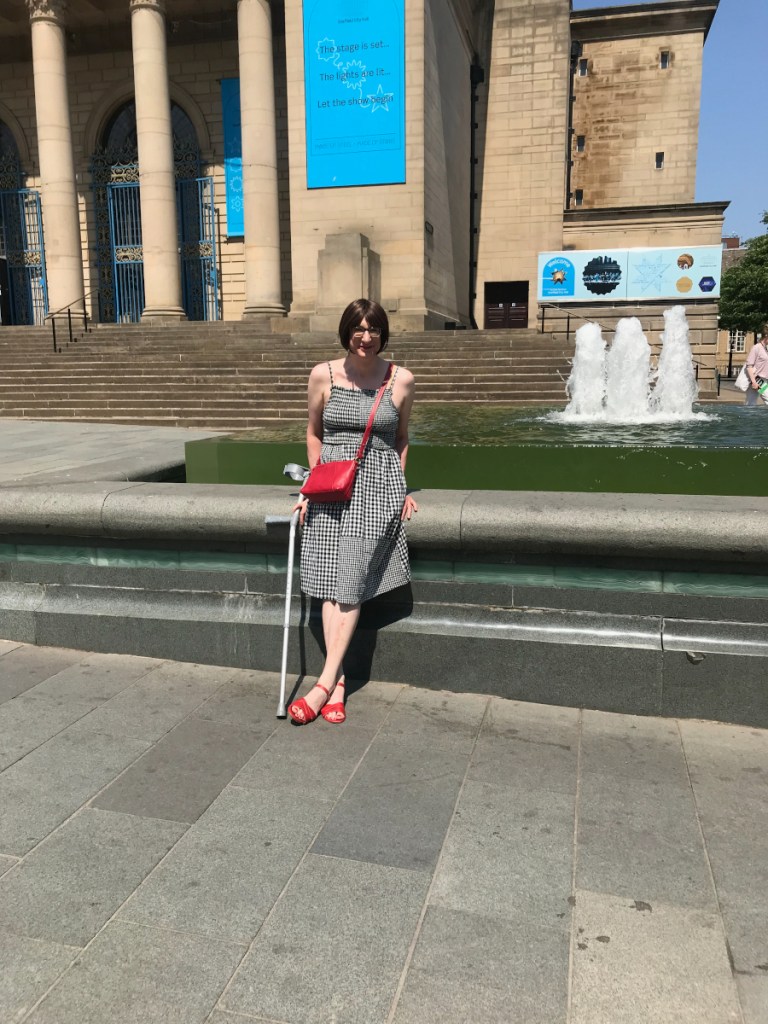
In late April, I suffered a herniated disc. I’ve always taken the elasticity of my body for granted. Whatever I’ve done – and I’ve achieved some pretty crazy DIY feats – my body has always bounced back after a few days. But April was diffrerent. It happened on a Thursday and I was supposed to be attending a gig with one of my sons on the Friday. This involved a short train journey, but by Friday morning I realised I couldn’t even make it to the front door let alone the station.
After a week without sleep because of the severity of the pain, I saw my GP who referred me to Accident and Emergency, where I arrived in an Uber in due course in collossal pain. I was seen quickly by an orthopaedic specialist who prescribed diazepam and “lots of walking”. Finally I managed to get some sleep…However, for more than two months I couldn’t walk without a crutch. As I write, seven months later, things are still not right but (thankfully) improving, albeit at a frustratingly slow rate.
Being incapacitated taught me some useful lessons. First, I discovered in a very immediate and personal way the challenges my place of work presents to anybody with a disability. And second, I realised that physical infirmity changed nothing in relation to my expression of my femininity. I can imagine that for some, the inability to wear heels might be a showstopper. However, fairly soon after my injury, I instead found myself hobbling up the hill to catch the bus, supported on my crutch.
For the first time in my life, I was entitled to sit on those special seats at the front of the bus; the little cartoon character displayed on the wall by the seat – an older person with a crutch – was undeniably me. And as I hobbled onto the bus I discovered a lovely thing. In daytime, a lot of older ladies take the bus down to the shops. Normally we barely notice each other. But as I hobbled onto the bus, they made quite a fuss of me, making sure I was seated comfortably. It was incredibly sweet, and it happened often. It was as though my infirmity made me one of them; as though the things that united us (frailty and femininity) were more tangible and significant than the one that divided us (my transness).
In late September I travelled to London for a gig. The morning after, sitting on the tube, looking downwards and lost in my thoughts, I became aware of a hand signalling to me from low down on the other side of the carriage. I looked up to see a woman about my age, with long grey curly hair, fabulous orange finger nails and a striking and very stylish outfit in vivid orange and green. As I looked up she smiled at me, and signalled to me to lift my head, gesturing with her hand to raise my chin. As I did so, I smiled and she smiled back and clenched her fist. The message was wordless but emphatic: be proud of who you are. It was a wonderfully touching and humbling gesture of feminine solidarity.
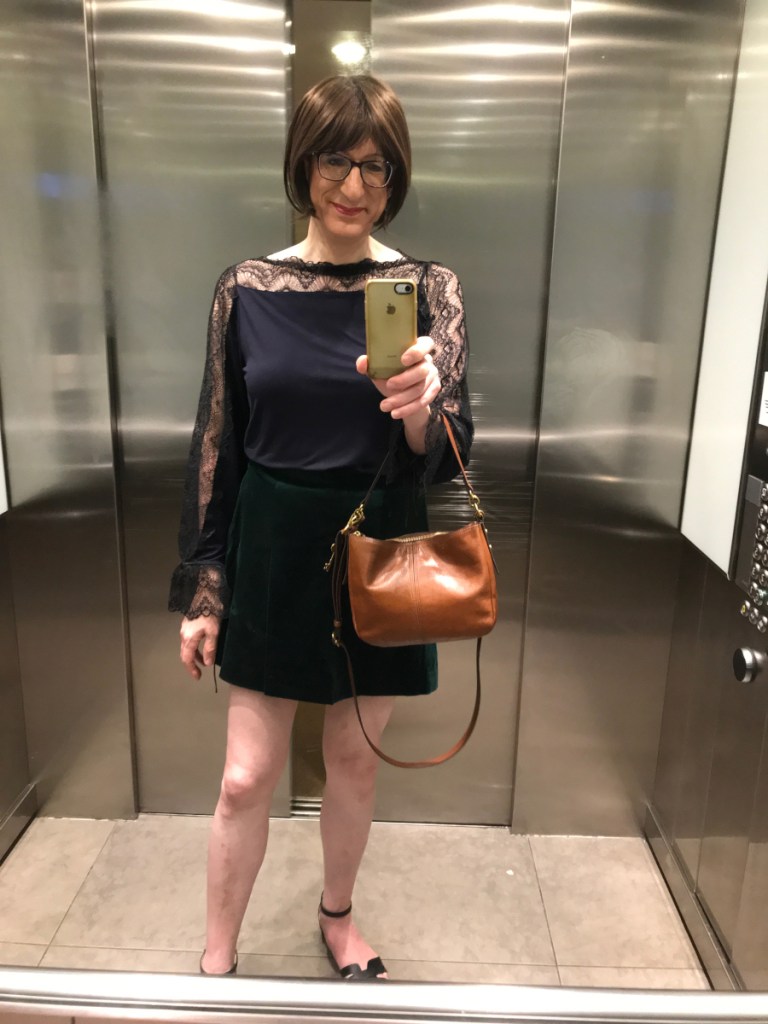
The culture wars make us all nervous. But my experience tells me that the haters are losing; in Sheffield at least, the fundamental decency of ordinary folk is deep-seated and crosses many boundaries. Most of the people I encounter barely notice me; those who do respond predominantly with warmth, friendship and acceptance. We need to be proud of who we are; it’s good to be alive and it’s good to be trans.
 Mrs Benn
Leave a comment